

Herein, I review recent bicycle patents, published in 2024. If you want a sneak peek at the future of where bicycle technology is headed, consider patent applications. Applications for utility patents publish (with some exceptions) 18 months after their filing date* – often before news of a related product is publicly released . Patent filings also may give an indication of the resources each company has been putting into R&D over the past several years.
Applications for utility patents publish 18 months (with a few exceptions) after their filing date* – which in many cases is before related products are revealed. Looking at patent applications is more insightful than looking at issued patents, as applications become publicly visible earlier, and thus may be the first look at technology a company seeks to protect. Of course, inventions shown in patent applications could also represent early stage R&D efforts that may not continue being pursued into saleable products, and in some cases the applications could even be abandoned before becoming issued (and therefore enforceable patents).
I have also tallied issued design patents, which protect only the appearance of a device – unlike utility patents, which are about function or construction. Design patent do not publish until issuance.
It is component manufacturers who drive substantial changes in next-generation bicycle technology. Think drivetrains, suspension, brakes, and ebike tech. Those are the bicycle industry members that file the most patent applications and have the most technology-based intellectual property. Manufacturers of complete bicycles may be the names most familiar to retailers and consumers and thus have valuable brand names and trademarks. But their technology development is generally limited to frame design, such as refinements to materials and suspension configuration.
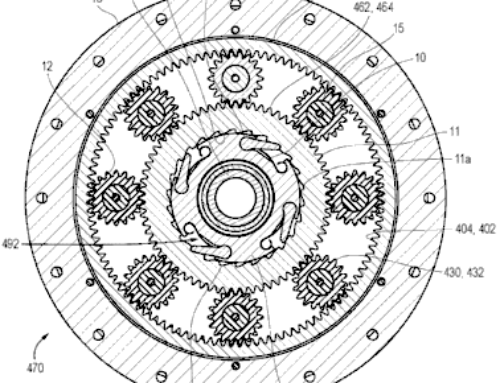
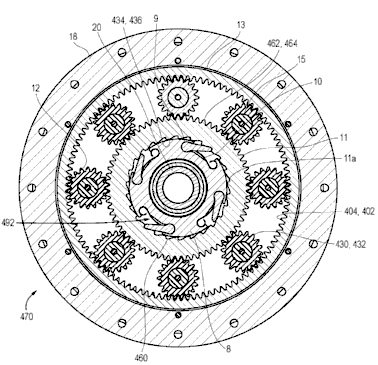
Shimano: 88 (also 11 for fishing technology) (0 bicycle-related design patents ) As always, Shimano leads the pack with bicycle industry patent filings. The most common theme of their applications? Control devices – specifically, electronic control devices for shifting and suspension, especially wireless ones. These include specific electro-mechanical set-ups for brake/shift levers, but also things like methods for electronic controllers to work with sensors and actuators. Shimano, more than any other company in the industry, is remarkably wily with what it discloses in its applications – seemingly with the goal of describing just enough information as needed under patent laws, while revealing as little as possible about specific product configurations. But a few cards are shown, like: a disc brake caliper mount that attaches (in part) to the rear axle, and a new style of freehub ratcheting mechanism (sort of a new take on DT’s venerable design). Ebike tech gets some attention, even though it’s one area where Shimano sells products but isn’t a dominant player. And as has been the case for years, there are suspension-related patent filings, though the company doesn’t presently sell related components. Ditto for dropper seatposts.
SRAM: 43 (4 design patents) All patent applications for the Chicago company’s brands — SRAM, Zipp, Avid, Truvative, Rockshox, Quarq, Time – are seemingly filed under the SRAM name. Like Shimano, control systems are hot item. These describe physical items like levers, as well as set-ups for processors and sensors, whether for shifting, suspension, or ebikes. The latter of which the company continues to chase, perhaps showing additional commitment to the future of their Eagle Powertrain products. SRAM is seeking additional protection on their universal derailleur hanger system, with a continuation application with more claims from the original application filed five years ago. An electronic pressure sensor built into a rear wheel is wildcard, as is a trainer stand that uses a second chain (separate from the bike’s) to drive a resistance unit/flywheel. Four issued design patents all have the same title: “Bicycle Sprocket Assembly”, and claim the appearance of 12 speed rear cogs.
Campagnolo: 4 (0 design patents) This past year marked the lowest number of US patent applications from the Italian company in the last 10 years. One application makes claims for powermeter sensors and controllers, described as usable on the wheels, cranks, bottom bracket, or chainrings – with the primary example being crank-based (spider). Another application claims a hydraulic line connector for brake levers. Like Shimano and SRAM, a method for controlling bicycle electronic systems is a pursuit of Campy, confirming that bicycle intellectual property has electronics methods (not just physical components) as a focal point. A wavy-shaped rim is their final pursuit. Campagnolo filed about two dozen patents in recent years around electronic shifting, related to the release of their wireless shifting system. Perhaps they’re catching their breath after the expense of securing those patents.
Specialized: 15 (9 design patents) Specialized continues to lead the way in patent work among the bicycle brands, by a large margin. Across utility and design patents, the company’s filings cover a wide range of inventions that include bicycles, accessories, and more. Three suspension applications focus on a linkage fork, along with a complex linkage system for rear suspension. There’s a tubeless valve that threads directly into a rim, which looks to improve on the ubiquitous if primitive lock-nut and stem we all know. There are two filings for a headset that allows headangle to be changed, continuing that trend for some mtbs. An improvement on another common item is “Packaging System for Bicycles”, which shows die-cut pieces to secure a bike’s rear wheel, among other bike box hop-ups. Specialized had nine design patents issue, including 4 designs for helmets, 3 for shoes, and 2 for frames. One of the latter seems to show a flexible rear triangle for road/gravel style frames.
Bosch: 1447, about 65 bicycle-related (0 design patents) While Shimano may be the bicycle industry giant, Bosch is a technology giant, with over 1400 patents filed in the period. Bosch is of course a leading supplier of ebike tech, and their patent applications that include “bicycle” in the description number 65 – not far from Shimano’s bike patent filings for the year. However, a sizable portion of those relate to sensing of cyclists in automotive systems for crash avoidance. These are outside the realm of the bicycle industry as far as competitive analysis is concerned, but surely a good thing for road safety in-general. Besides filings for the expected ebike battery, motor, and related control systems, Bosch has been working on bicycle brake-wear sensors, wearable sensors for crash detection, and wireless communication from ebike to a central location, presumably for rental/city/fleet bikes.
Canyon: 3 (0 design patents) The consumer-direct-only brand continues to trickle out new patent applications in the US. Canyon values patent protection more than many major brands: In 2022, Canyon had more than three times as many utility patent filings as Trek, Giant, and Cannondale combined. That said, 2024 was a light year for Canyon in both volume and topic. This year’s crop covers one application for internal wiring in frame for lights. Another show a strap system for attaching bags to a fork. The third describes a seatpost with built-in lumination, for rearward visibility.
Trek: 3 (1 design patent) Trek may be hoovering-up bike shops, but they’re not chasing many patents at present, continuing their zero-or-a-few record of recent years. Two of their patent filings deal with helmets. One of those shows an outer shell joined magnetically to an inner energy-absorbing layer, for purposes of rotational energy management. Another shows a multilayer construction: “configured to move in multiple directions in response to an impact to the cycling helmet”. Both look to be alternatives to the MIPS system. Their third application creates a cooling system for ventilation of ebike motors housed in the bottom bracket area.
Fox Racing: 18 (0 design patents) This company is about suspension technology, as used both on bicycles and motorized vehicles. As such, it difficult to parse-out which patents are bicycle-specific – 16 of the 18 applications include “bicycle” in the description, but some of those are clearly for motorized vehicles. Electronically-controlled shocks are covered in numerous applications, describing on-the-fly adjustments to damping, spring rate, and more. As they’ve done for years, Fox continues pursuing new patents on “Methods and Apparatus for Virtual Competition” that’s directed to mountain bike racing and ski racing, with three related applications – yet no apparent movement towards commercializing the esports inventions.
Tektro: 5 (0 design patents) Tektro has been promising to make in-roads into the drivetrain market dominated by Shimano and SRAM. The company made its name with brakes, and 2024 patent publications show that the Taiwanese company continues with electronic shifting system development, as well as brakes. The company filed for dozens of electronic derailleur and shifter patents in recent years, and for 2024 they continue, covering electro-mechanical devices, as well as wireless pairing methods. An anti-lock brake patent – a decades long holy grail of bicycle invention – was also filed, focused on a hydraulic valve-based system housed in a disc caliper.
Others: Giant showed three US utility patent applications for 2024, with one for a shock and two for a dropper post. Cannondale again showed no recent US patent filings, and ditto for its owner PON.
*Patent applications published in 2024 were submitted to a patent office (US or foreign) between July 2022 and July 2023. The term “filings in 2024” is used to describe what first became publicly visible in 2024, though they were actually submitted up to 18 months earlier.